
The Disney OpenAI Deal Is Worse Than You Think

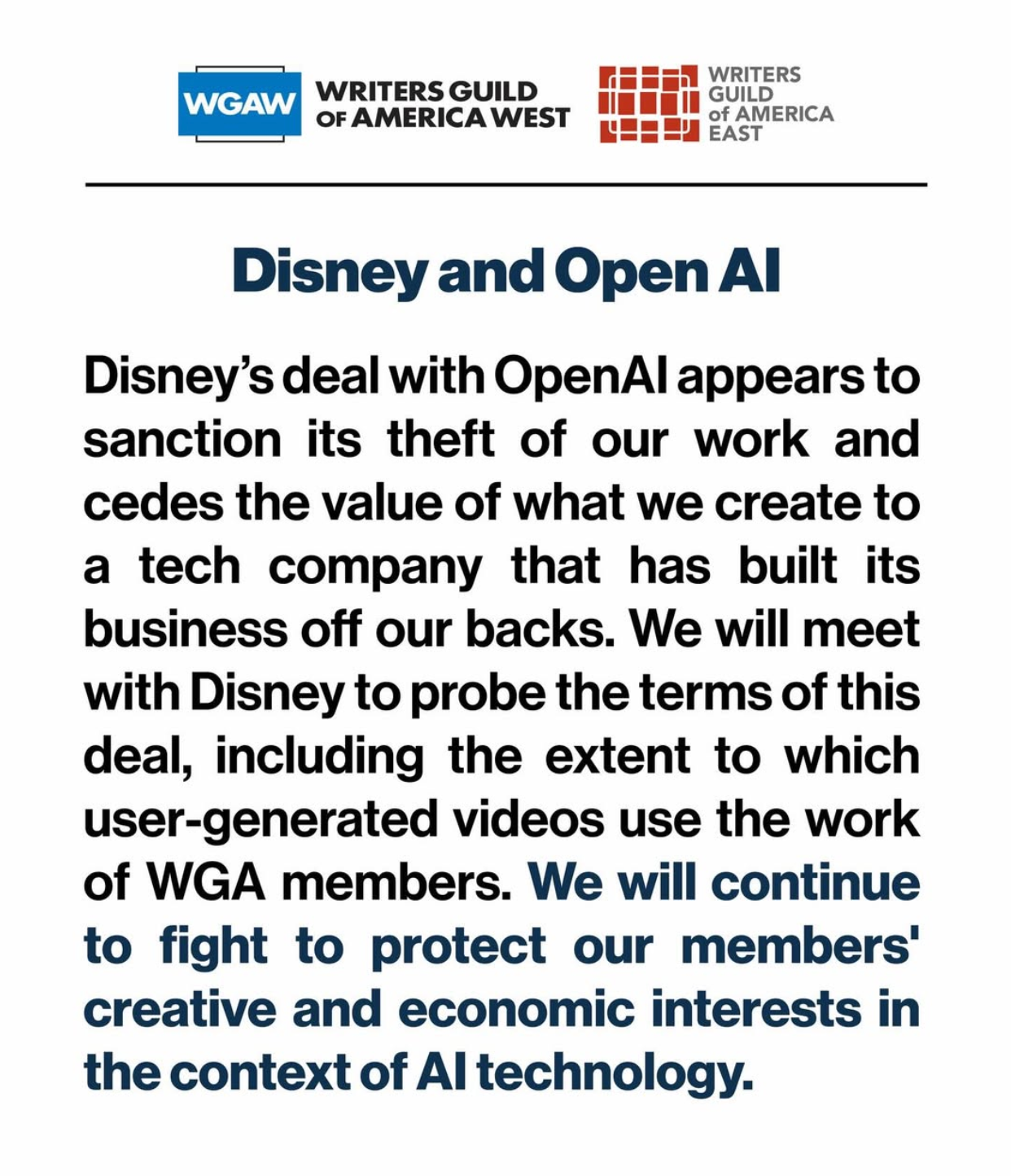
Story updated to include WGA's official statement on the deal. You can read The Animation Guild's full statement on bsky.
Today, Walt Disney Studios announced a deal with OpenAI to bring characters from across Disney's brands to Sora (OpenAI's video generation tool). The House of Mouse claims that "Disney and OpenAI affirm a shared commitment to responsible use of AI that protects the safety of users and the rights of creators," but anyone with an ounce of familiarity knows that there's simply no chance of that. The rights of creators are violated by the very idea of this deal, and even if we could pretend that the safety of users could be protected from the things generated by the technology, Disney says nothing about how the mega corporation will offset the environmental disaster that it's about to contribute to.
- Truths and myths about AI's water usage.
- AI is already costing you more at home, raising energy bills across the country.
Disney has been open about its intent to put user generated content onto Disney+. Because why pay animators when you can get a kid (or Disney Adult) to generate unlimited Content™ for your user base? Disney just signed a one-way ticket to a content well that has no floor. But, beyond the content is also a never ending swell of free advertising and ideas. Gone are the days of "do not send me your pitch, it puts both of us at legal risk," because there is no liability when you're signing your soul away to OpenAI to make Judy Hopps and Nick Wilde live out your furry domestic bliss fantasies.
To put it in sharper terms: Disney is seeking to profit off of the dreams of children. Not in the figurative way cynics believe that they already are, but in the literal.
Adults choosing to participate is one thing (don't, you fucking goblins, you're fast forwarding the whole planet death thing and hijacking everyone's energy bills), but kids don't understand the consequences. Kids just hear "I can make my favorite character do whatever I want, whenever I want." And that dream, should it match the dream of other kids in a way that pleases the algorithm, might just end up on Disney+ to generate completely free viewership hours for The Mouse.
The dangers aside, the biggest laugh in all of this is that Disney believes that they can put the rabbit back in the hat. Their licensing deal with OpenAI is for 3 years, with the option to extend. The thing is, you can't agree to feed all of your art into a plagiarism machine and then act surprised when it steals from you after your deal is done. Disney will have the option to sue, of course, but what good will that do when Sora can simply be programmed to mimic the characters but with enough ever-so-slight differences that they enter the ever-nebulous land of "fair use"? Kids have been buying dollar store ripoff merch for generations. Disney's belief that they can leave this relationship whenever they want is laughably stupid, even by corporate overlord standards.
Meanwhile, Disney and OpenAI's insistence that the will make the tool safe for all of their users is an absolute farce. Kids are killing themselves over it. ChatGPT is encouraging suicide. It is telling kids not to seek help from their parents before they kill themselves.
All of these are separate stories with victims ranging from 13-23. It took me less than a minute to find them. A deeper dig would undoubtedly find more. All while, Sam Altman's OpenAI claims that these deaths are because of misuse of their technology and insist that they are not to blame or legally liable for the harm they have caused.
This deal is bad for creators across the board, yes. And it comes after what feels like an endless avalanche of anti-art decisions from corporations across the board. But with the loss of livelihoods also comes the very real risk of a loss of life on top of the global impacts that we're already seeing unfold from the unethical technology.
Pickety Witch is an independent site run by Amelia Emberwing. If you found today's insights useful, please consider subscribing to support human-led work.


Comments ()