
The Bride! Review
Reclamation, reinvigoration, rejuvenation… that is the song that Gyllenhaal’s The Bride sings.
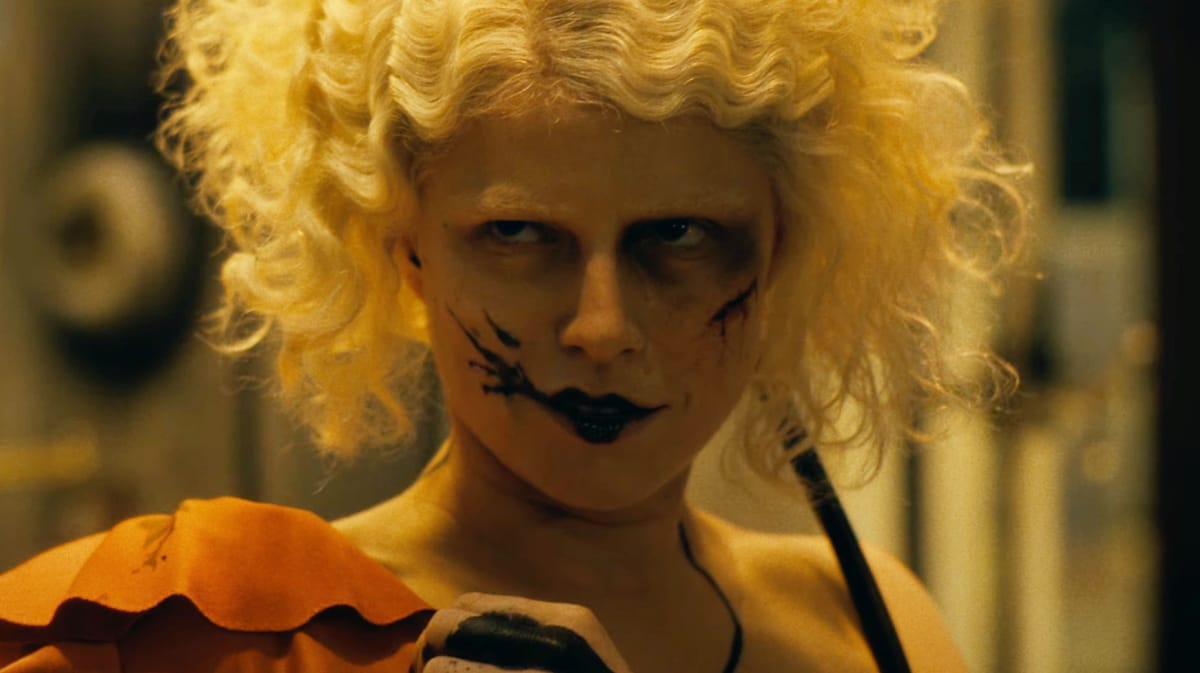
The Bride isn’t the first film that when you tug on any of its strings it all starts to unravel. It is, however, one of the few to successfully justify its incoherence as a narrative strength. Maggie Gyllenhaal’s third outing as writer and director sings for its supper, and it’s taking you along for the ride whether you’re ready or not.
Jessie Buckley and Christian Bale play The Bride and Frankenstein respectively. She calls him Frankie, he calls her Penelope, and both bear names not of their own but of those who forced them into creation. Of course, Doctor Frankenstein never intended his creation to be his mate. Frank may not have directly created his intended bride — that honor goes to Annette Bening’s delightful Dr. Euphronius — but his intentions were clear from the start: he is being killed by his loneliness, and he intends to make that someone else’s problem.
Though my ire may not immediately indicate it, Frankenstein is, broadly speaking, written sympathetically here. Gyllenhaal goes out of her way to make it clear that while he is in agony, he also knows enough to understand that his pain doesn’t justify the lie he and Euphronius tell the reinvigorated Bride (she merely had an “accident” that caused amnesia, and cannot remember her husband to be), and Bale easily translates those intentions on screen.
Where Frank’s despair comes from his solitude, The Bride’s is two fold. On the one hand is rage for her sisters — a sentiment I won’t expand on because I’d like you to experience it for yourself. On the other is the possession of a deep wrath at institutions that have failed women from the beginning of time. The combination of the two creates a monster, one that is powered by the heart of a woman trying to find her name in a world that would give it to her against her will while expecting her to tolerate its sea of violence against her and say “thank you” in return.
But she’d prefer not to.
Frankenstein and The Bride’s story is one that I’ve struggled with throughout the ages, and never at the fault of The Bride if you catch my drift. The former is a character that I have a deep love for in all of his forms riiiiight until The Bride is introduced in any form what-so-ever, and then I develop a deep and immediate loathing for reasons that don’t feel necessary to explain in a review on a film about feminine rage but, in short: you don’t own her you fucking creep. Get a job! Stay away from her.
I won’t tell you that The Bride completely avoids reigniting that frustration. It tries very hard to, fails astronomically for about thirty minutes, and then rights its ship. I do struggle pretty hard with those thirty minutes, but the story has enough merit for me to look past that irritation not just because of the overall narrative but because when Frank and The Bride do the, uh, monster mash, the depiction is almost entirely of her pleasure.
Of course, The Bride lives and dies by Buckley’s performance and oh, what a joy that is to behold. I do think it’s possible that she may be our greatest living actress, y’all. Her glee, her wrath, her pipes, her oration, her tics… Each breath Buckley takes brings an added layer of depth to The Bride. She is a marvel, and women everywhere deserve her.
Men? Jury’s out.
While on the topic, it feels important to acknowledge that Gyllenhaal’s smartest male character isn’t that of Frankenstein but of Peter Sarsgaard’s Detective Jake Wiles. Sarsgaard performs the character admirably, of course, but the cleverness of Wiles exists in his simplicity. Throughout The Bride, he repeatedly insists that things aren’t “up to him” while never even trying to affect change. Sure, it’s a pity all them broads are losing their tongues, but it ain’t up to him! Awful that the Commissioner dropped that important case, but it ain’t up to him! Pity that his partner (“secretary”) Myrna Mallow (Penelope Cruz) can’t have her name on their cases because she’s a lady. It. Ain’t. Up. To. Him.
Wiles’ existence in the story highlights the most exhausting (and prevalent) male archetype in modern society: the one that insists that he sympathizes with the oppressed but not enough to do a thing about it because he “has no power.” A fact that he will insist ‘till he’s blue in the face to those with far less power who fight anyway. He’s little more than a side quest whose sole function is to prop up The Bride and Myrna’s stories (as is right and just), but the inclusion of the character is so, so clever on Gyllenhaal’s part.
The Bride shines from a technical perspective as well. Its distinct aesthetic clashes wonderfully against the 1930s backdrop, and the integration of the Ronnie Reed (Jake Gyllenhaal) pictures throughout the eras offer a cinematic reverence that the audience can share in. Choreographer Michelle Dorrance does something really special with the several dance numbers throughout the film, not just with Reed's smoothness but often in spite of it.
It pains me to admit, the visual comparisons to The Joker will not be unfounded, as the films share cinematographer Lawrence Sher in common. But listen, no one said The Joker films weren't pretty to look at, OK? Sher is clearly comfortable with the jaunty, frantic but occasionally stoic and pensive shooting style that the film calls for.
Reclamation, reinvigoration, rejuvenation… that is the song that Gyllenhaal’s The Bride sings. Its hyper stylization isn’t just a callback, it’s a battle cry. Classic film juxtaposes against bright, “offensive” colors and tousled styles. The Bride storms across America with her bleached brows and bralette pointedly exposed as her black tongue and stained lips and cheek become the mark of a revolution. Bucking convention drives the story with purpose, with a love for storytelling and dance making its way into the narrative in what will at first seem like a classic homage before it shifts into jaunty, off-kilter dance moves that both awe and intimidate.
Mary Shelley would be proud.
Comments ()