
WHALEFALL Review
Whalefall is preposterous.
That sentiment isn't over the film's premise, of which sees a young man unwittingly gobbled up by a sperm whale embroiled in battle with a surprisingly vindictive squid. While that, too, is absurd, it's the kind of absurdity that's welcome in the disaster/survival genre. No, Whalefall is preposterous because its emotional core is such unmitigated nonsense that even the internet's favorite Bad Day Haver™, Austin Abrams, can't save it from itself.
From a technical aspect, the film is mostly fine. It flounders occasionally when it comes to explaining its light sources (not you Glowy, you're perfect), and visually you spend the majority of your time staring at the gummy insides of a whale, but it looks OK. The sound design is grating, though likely with intention, and Joseph Trapanese's score is passable even if there is a song that sounds as if it's straight out of Pokemon (which is actually filled with bangers, but this isn't the place).
If you're sick of the "IT'S ABOUT GRIEF" genre, Whalefall isn't for you. I have a higher tolerance for it than most, even if I can admit the oversaturation of the message. The grief here isn't so much the issue as it is the bow wrapped around one big, fat messaging problem.
Join the Coven
Jay (Abrams) starts his No Good Very Bad Day on a quest to find his father Mitt's (Josh Brolin) remains. Mitt was beloved by the town, a loving husband and a doting father to his two daughters. He dies by suicide after refusing treatment for his terminal illness, giving his body to the sea, and leaving his family letters of farewell. He even writes one for Jay, who he very explicitly abused while alive.
Whalefall posits that Jay should forgive his father for things like drunken nights on the boat, complete with Mitt pulling a knife on him. Not because what Mitt did was OK, of course, but for Jay's own peace! He'll never be able to move on if he doesn't forgive Mitt for all the things he's done.
Fuck that.
I'm not going to bore you with a tirade over all the ways that sentiment is obtuse, or how dismissive it is of its lead's pain (no matter how much that pain is depicted as whiny in the film), but I will say that it's one hell of an emotionally manipulative way to keep your audience engaged throughout your 100+ minute film.
Jay has two primary concerns while in the belly of the beast: don't get crushed, and don't run out of oxygen. His tank's gauge is a constant reminder of just how little time he has left, but for the viewer it serves as a stark reminder of just how much longer you're trapped in a dismissive exploration of what it's like to unexpectedly lose the person who hurt you the most. Jay's pain over what his father did is constantly undervalued by the story, which instead offers a "I'll give you something to really cry about" approach via the gauntlet of torture its lead is put through.
If you have the stomach for all of the above, I'll at least mention that Abrams and Brolin each deliver strong performances. Abrams has to deal with the hurdle of having a mouthpiece shoved in his maw for the majority of the story, but he mostly overcomes the challenge.
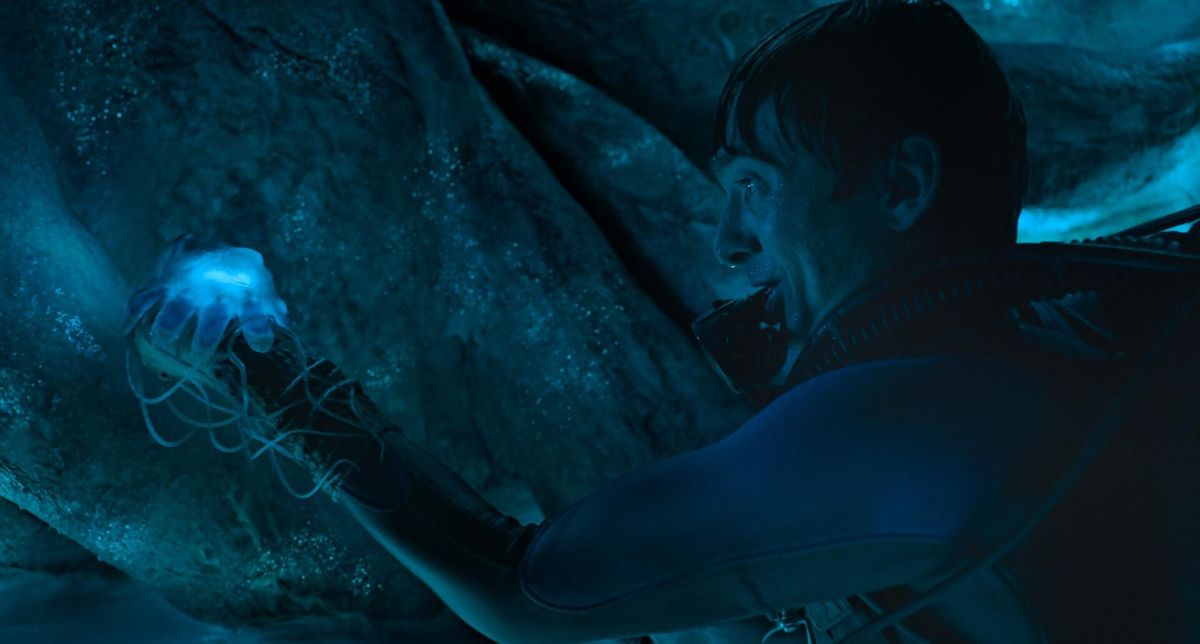
Glowy the Jellyfish (as seen in the header photo) was the best part of the film. By the end, I was staunchly team pissed off squid. Oh, and if you're a filmmaker and you have some voice in your head telling you to make the whale in your film speak? It has never once worked and I am begging you to reconsider.
It's too painful.
If you've enjoyed this review, please consider subscribing. If you're already a subscriber and want to help support independent entertainment criticism, consider a paid subscription!

Comments ()