
MOUSE Review
Indeed, Mouse is impeccable for the same reason Saint Frances was: unwavering authenticity.
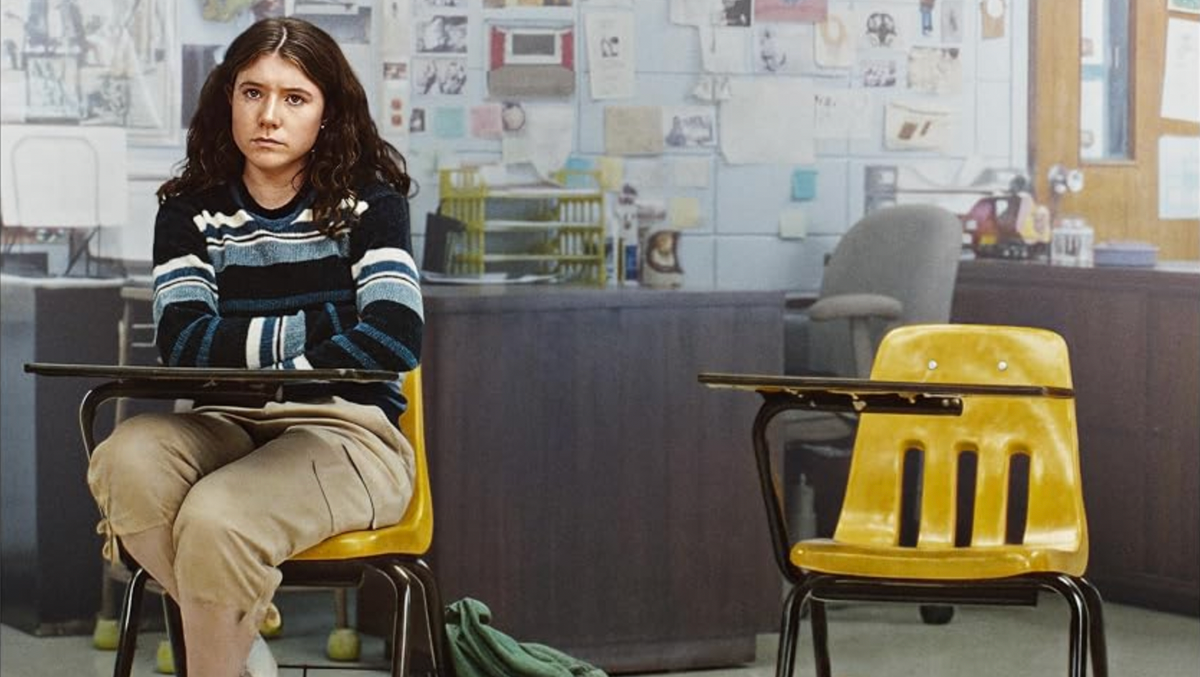
Kelly O'Sullivan has been one of my favorite writers since her first feature, Saint Frances, hit back in 2019. If you haven't heard of it, don't beat yourself up too much. Quarantine gobbled it up. O'Sullivan and creative partner Alex Thompson have had several project since, and return this year with the gift of Mouse. The film is a remarkable look at loss, grief, and class across generations, but what makes it special isn't its themes. Indeed, Mouse is impeccable for the same reason Saint Frances was: unwavering authenticity.
Mouse centers on Minnie (Katherine Mallen Kupferer), an awkward teen headed into her senior year after the tragic loss of her best friend Callie (Chloe Coleman). The loss is shrouded in a kind of ambiguity, with her death often explained as "something happened and she crashed into a pole." What's that something? Who knows. How did she die when the car was almost perfectly fine? Who can say. That's part of the tragedy.
Their shared grief drives Minnie and Callie's mother Helen (Sophie Okonedo) closer than ever, developing into something codependent, eventually toxic, and painfully understandable. Helen fills the daughter-shaped hole in her heart with Minnie; Minnie connects to the memory of her best friend and replaces the mother she finds lacking with the financially better off and "classier" Helen. Trouble is, Minnie's mother Barbara (Tara Mallen) isn't just alive, she also has a deep love for her daughter even if she can't always be there for her in the ways that Minnie needs.

The already impeccable ensemble is rounded out by scene stealer Iman Vellani as Minnie's would-be new girlfriend, Kat and David Hyde Pierce as the school's sympathetic drama teacher, Mr. Murdaugh.
O'Sullivan has a knack for writing films that will take you apart bit by bit and put you back together again by the end. Importantly, her stories put you back together again without feeling an obligation to be "clean" or buttoned up. Oh, and did I mention that you're probably going to be laughing pretty frequently, too? The unflappable empathy of her writing means that no heartbreak or fallen tears feel manipulative or unearned, and Mouse is no exception. It's the humor that always feels like her greatest trick, though.
Second hand embarrassment and discomfort humor traditionally sends me into whole body shut down, but it's usually due to a reliance on forced absurdities. By being so fiercely human, Mouse's screenplay delivers its cringiest moments while making you laugh along with them. Countless films seek to capture the high school experience, but O'Sullivan's script isn't trying to recreate anything so much as it grabs you by the neck and hurls you back into your most uncomfortable adolescent experiences (even if you were lucky enough to avoid such devastating loss at a young age).
Stories featuring multiple generations often struggle to deliver full-bodied characters across kids and adults. Perhaps what is so striking about Mouse is that every single character big or small, young or old is a person. Not a caricature or foil (one character does come close, though even that is in service to the story), but an honest-to-gods, rounded out, human.
Support independent film criticism
Hyde Pierce has the least to do in the film as far as the adults are concerned, but the tenured stage actor steals hearts with a pitch-perfect monologue that left me in tears. Meanwhile, Mallen's Barbara is perhaps the most nuanced character of the bunch. Never once does she blame or attack Helen for her unhealthy relationship with her daughter. Instead, her explosion is a well-timed prod that finally offers Helen the grace of being treated like a person instead of a Fabergé egg that might spontaneously combust if handled incorrectly.
If I'm being frank, I could write a thousand more words about every performance in Mouse. Though I'm running out of synonyms for "human" and "relatable."
Like much of their filmography, Mouse is delightfully bright. O'Sullivan and Thompson love a sunny day and a well-lit night, both of which seem so rarely well done anymore that it feels noteworthy. While said brightness is par for the course for the creative duo, there's a really pleasing juxtaposition to it in Mouse. Minnie Dunn and Helen Bell's respective worlds are ending, but the world around them has the audacity to keep going on while the sun's rays add insult to injury.
This isn't the only visual trick up Mouse's sleeve, though. O'Sullivan and Thompson offer up their strongest illustration of Minnie's character not through monologue or tears of grief, but with a moment in rehearsal that no one but Mr. Murdaugh has the opportunity to see. The students all pantomime with their eyes closed while the teacher offers prompts. When he directs "and this is who I am in PRIVATE..." all of Minnie's classmates get small, while she stretches her arms wide and to the sky. It's a perfect illustration of the filmmakers' understanding that without the small, a story's big moments just don't matter, and a joyous reiteration of Minnie's depth.
To put it simply, Mouse is stunning. It is at once a perfect fit into O'Sullivan and Thompson's filmography and a bold look at how much they've grown as storytellers over the years. I can't tell you it beats out Saint Frances in my heart, but I can tell you that it's joining my "won't shut up about this, ever" list in a big way.
If you've enjoyed this review, please consider subscribing. If you're already a subscriber and want to help support independent entertainment criticism, consider a paid subscription!



Comments ()